
How to Build a More Proactive Insurance Review Process
Your in-force insurance book may hold more opportunities than you realize. Term policies have renewal dates, conversion windows, and changing premiums, but without a proactive review process, those moments can easily pass unnoticed. The challenge isn't necessarily a lack of information. It's knowing what to look for, when to act, and how to turn that information into meaningful client conversations.
The goal: Move from reactive policy reviews to a repeatable system for identifying opportunities, preparing for client conversations, and reducing the administrative work involved.
Start by Mining the Data You Already Have
An advisor doesn't necessarily need a sophisticated system to start being more proactive with their insurance book. Much of the information needed to identify potential review opportunities may already be sitting in the CRM.
Jake Sheehan of Life Design Systems suggests using a few simple recurring reports to identify clients who may need attention through a simple monthly CRM check.
Look for:
- Clients with a birthday next month
- Term policies approaching an anniversary
- Clients whose insurance age will change in the next 6–7 months
These simple triggers can help advisors identify policies that deserve a closer look before they become urgent.
Look 12–24 months ahead
Timing is especially important when it comes to term insurance. Rather than waiting until a client receives a renewal letter, advisors can identify upcoming conversion windows and potential premium changes 12 to 24 months in advance.
That gives the advisor time to:
- Review the client's current situation
- Assess their existing coverage
- Consider how their needs may have changed
- Explore potential options
- Have the conversation before a deadline creates urgency
As Charlie Conron of Life Design Analysis puts it:
“Term insurance is like a diaper, and at some point, you do have to change it.”
The point isn't that every term policy needs to be replaced. It's that policies need to be reviewed as clients and circumstances change and a proactive process makes those reviews much easier to manage.
Turn a Policy Review Into a Broader Planning Conversation
An insurance review doesn't have to begin and end with the policy itself. A change in coverage can be the starting point for a much broader conversation about a client's financial, tax, business, and estate planning needs.
Planning first. Product second.
Instead of asking: “What insurance product should this client have?”
Start with: “What does this client need to accomplish, and where does their existing coverage fit into that plan?”
That shift can change the entire conversation.
For example, advisors can look at:
- Existing insurance coverage
- Future tax liabilities
- Business and corporate planning
- Estate needs
- Changes in the client's financial situation
- Whether current coverage still aligns with their goals
Visualizing these pieces together can also make complex planning conversations easier for clients to understand. Rather than walking through pages of carrier illustrations, a visual comparison can help show where coverage exists today, where potential gaps may appear, and what future funding requirements could look like.
Bring the professional team together
CPAs, estate lawyers, and other professionals may each have a different piece of the client's financial picture. Advisors can play an important role in bringing those perspectives together. One example discussed in the podcast involved a business owner with a significant insurance case. Rather than bringing the entire proposal to the client first, the advisor met with the client's CPA and estate attorney beforehand to align on the recommendation. By the time the client meeting happened, the professional team was already on the same page and the proposal could be discussed with the client directly.
The takeaway: The advisor's role can extend beyond recommending a product. They can help coordinate the people and information needed to build a more complete plan.
Eliminate Friction Before the Meeting
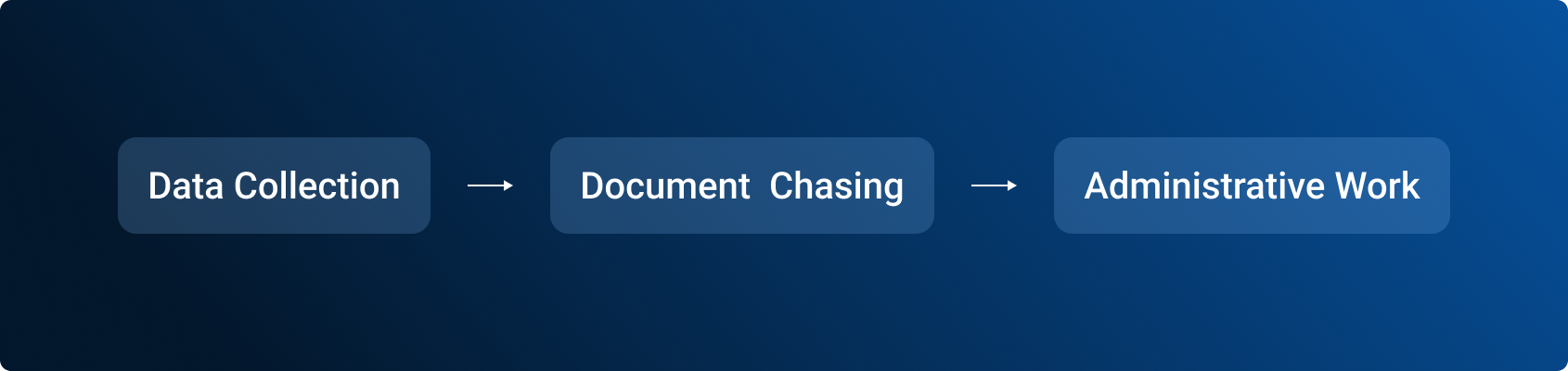
Even when advisors know which clients need attention, there is another challenge: capacity. A large portion of a client meeting can be spent gathering information that could have been collected beforehand.
Think about everything that might happen before an advisor can actually get to the planning conversation:
- Updating client information
- Collecting documents
- Asking discovery questions
- Confirming existing coverage
- Gathering information needed for compliance
By the time that's finished, a significant portion of the meeting may already be gone.
Move information gathering outside the meeting
Digital intake allows clients to provide information and documents before the meeting begins. Instead of spending the first 30–45 minutes collecting basic details, advisors can walk into the meeting with the information already organized.
That means more meeting time can be spent on:

rather than:
This can also create a more consistent process across the practice. Instead of relying on every advisor or team member to remember what information needs to be collected, the intake process can be standardized.
A Simple Framework for Reviewing Your In-Force Book
The ideas discussed throughout the podcast can be turned into a straightforward workflow:
- Consolidate - Bring scattered insurance information into one clean, accessible place.
- Identify - Look for upcoming anniversaries, conversion opportunities, premium changes, and other potential triggers.
- Triage - Prioritize opportunities that are 12–24 months out, rather than waiting until they become urgent.
- Review - Look at existing coverage alongside the client's broader financial, tax, business, and estate needs.
- Prepare - Collect updated client information and documents before the meeting.
- Act - Use the meeting to focus on the recommendation, planning conversation, and next steps.a
The goal isn't to create more work. It's to create a repeatable process that makes the right work easier to do.
What Can Advisors Take Away?
If you're looking to be more proactive with an existing insurance book, start with a few manageable changes:
- Mine your existing data
You may already have the information needed to identify upcoming opportunities. - Start earlier
Looking 12–24 months ahead creates more room for planning and client conversations. - Make complex information visual
Simple visual comparisons can make insurance and tax planning easier for clients to understand. - Coordinate with the client's professional team
Working with CPAs and estate professionals can bring important pieces of the client's plan together. - Move administration out of the meeting
Digital intake and document collection can give advisors more time to focus on advice.
From Reactive Reviews to a Repeatable Process
Managing an in-force insurance book isn't simply about finding additional business. It's about creating a system for staying ahead of client needs. When advisors can identify upcoming policy changes early, connect insurance to broader planning, and reduce the administrative work required to prepare for a meeting, they create more room for the work that requires their expertise. Reducing low-value administrative work isn't just about efficiency. It can give advisors more capacity and confidence to focus on higher-value advisory work. The opportunity may already be sitting in the book. The question is whether there is a process in place to find it.
An Article Drawn From
This article draws on conversations from our webinars, featuring financial advisors and industry experts:
https://info.advisorflow.ca/en/webinars/strategies-for-growing-your-insurance-block-of-business
https://info.advisorflow.ca/en/webinars/practice-management-strategies-with-experts
Looking to reduce the administrative work involved in client onboarding and information collection? Learn more about AdvisorFlow: